Salesforce is buying Cresta. The phone call was the one customer channel its agents could not work in
Salesforce agreed to acquire Cresta, whose voice agents handle complex calls and coach human reps against one quality standard. What changes when voice joins the CRM, and what to check.
Listen to this article · 5 min
AI-generated narration of the full article.
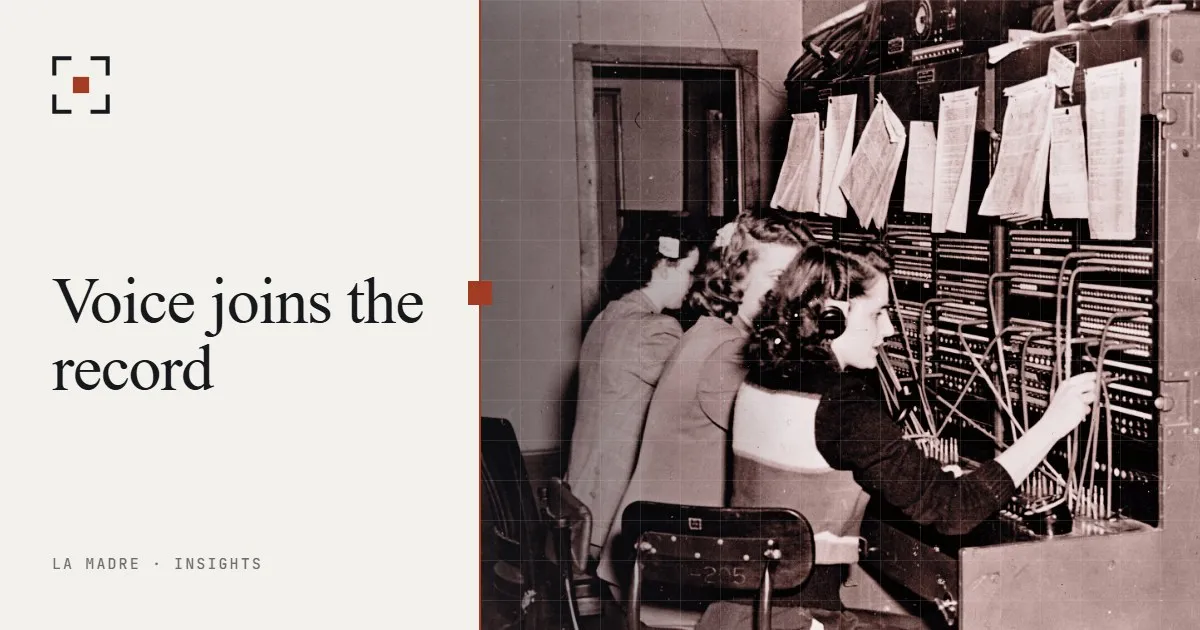
Customers still pick up the phone for the problems that matter most: a cancelled flight, a disputed bill, a service that went down. That is exactly where most enterprise AI has been weakest. Chat agents improved quickly because text is forgiving. A voice call is not. It happens in real time, people interrupt, and a wrong answer is heard before anyone can review it.
Salesforce’s announcement on November 2 is a bet on that channel. It has signed a definitive agreement to acquire Cresta, which it describes as a voice-first operating system for customer experience. The price was not disclosed.
What Cresta does today
Cresta sells three things on one platform. Its voice agents hold natural conversations, handle interruptions and, in Salesforce’s words, resolve complex customer calls end to end. Its real-time guidance coaches human representatives during live calls. And its conversation analytics look at every interaction, human or automated. Salesforce names Marriott, Comcast and Alaska Airlines among the brands using it.
The detail worth noticing is that the same platform tests and improves the voice agents and coaches the people, holding both to one standard of quality. Most contact centers measure humans with QA scorecards and bots with containment rates. Those are different numbers that answer different questions, and nobody can compare them.
Why the CRM wants the call
Salesforce’s argument is that conversations are full of signals that never reach the systems where work happens. A voice agent that understands the caller but cannot see the account history, the open case or the refund policy can only talk. One that can see them, and act inside the workflow, can resolve.
That is the same logic behind its agreement to buy Braze in October: the value of an agent depends less on how well it reasons than on whether it is connected to the system that executes the outcome. For service, that system is Service Cloud and Agentforce. Cresta brings the part those products could not do well on their own: the live call.
It also confirms a point we made when looking at voice agents as real-time systems. Voice is a latency budget before it is a model choice. Every lookup and every tool call has to fit inside a pause that a caller will tolerate, and that pushes architecture toward fewer, faster calls into the CRM.
What is not settled
The deal has not closed. Salesforce expects completion in the first quarter of its fiscal year 2028, which begins in February 2027, subject to regulatory approvals. Until then, Cresta and Salesforce are separate products and every integration is a plan.
Telephony stays plural, for now. Salesforce says that after closing, Cresta will keep supporting the contact center and telephony platforms its customers use today. Customers running Cresta on another vendor’s contact center should still ask for that commitment in writing, with a time horizon. Post-acquisition roadmaps tend to converge on the acquirer’s stack.
Quality is the claim to test. “One standard for humans and agents” is the most interesting promise and the hardest to verify. Ask how a call is scored, who defines a resolved call, and whether a voice agent that hands off at minute nine counts as a success. If the metric rewards containment, the agent learns to keep callers on the line, not to solve their problem.
What a buyer should prepare
A voice agent that acts in the CRM turns a phone call into a transaction channel. Three things follow.
First, authority per action. Reading a balance, changing an address and issuing a credit are different risks. Each needs its own permission, and the agent should act under a scoped identity, not a shared integration account.
Second, recording and consent. Every call becomes data that feeds analytics and, likely, model improvement. Several U.S. states require all parties to consent to recording, and callers increasingly expect to be told when they are speaking to an AI. Consent, disclosure and retention have to be designed per jurisdiction, not inherited from the old IVR.
Third, the handoff. The moment a voice agent transfers to a person is where customers judge the whole system. The representative should receive the transcript, what the agent already tried and why it stopped, so the caller never has to repeat the story.
The acquisition says the contact center is no longer a separate island next to the CRM. Whether that makes service better depends on what happens on the first hard call after go-live, not on the press release.