Vivix tests furnace changes on a digital twin before touching the real one. Industrial AI answers to physics
Brazilian glassmaker Vivix is building an executable digital twin of its float-glass furnace with Siemens, Snowflake and NVIDIA. Operators ask what-if questions; physics models answer.
Listen to this article · 6 min
AI-generated narration of the full article.
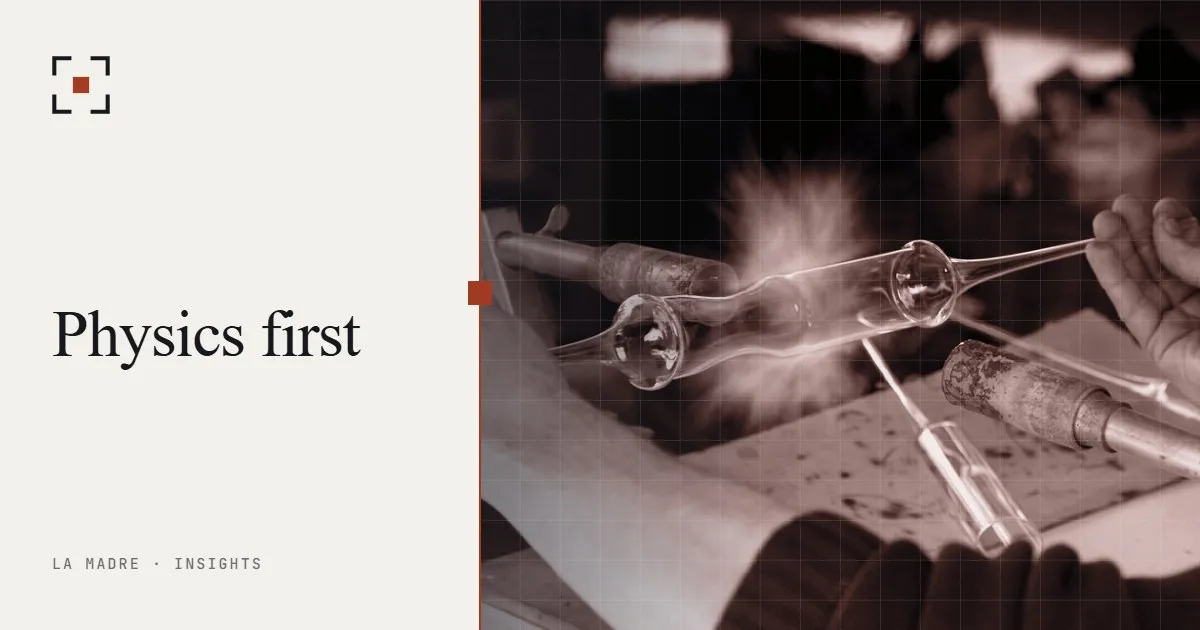
Nobody can look inside a float-glass furnace while it runs. At around 1,550 to 1,600°C, the interactions between combustion gases, molten glass and the refractory walls that hold it all are mostly invisible, and the furnace runs for years between major repairs. Every change to burner settings is a bet on conditions that operators can only partly measure.
Vivix, a Brazilian manufacturer of flat glass and mirrors, is building a way to place those bets on a copy first. In a technical case study published by Snowflake on October 21, written with engineers from Vivix, Siemens, Snowflake and NVIDIA, the company describes an executable digital twin of its furnace: physics simulations, live sensor data and AI models combined so that teams can estimate what they cannot measure and test operating changes before making them.
How the twin is built
The design is a sensible division of labor between four technologies.
- Physics, made fast. High-fidelity Siemens Simcenter multiphysics models are converted, through reduced order modeling, into lightweight executables that run in near real time. Siemens’ Executable Digital Twin Manager handles their lifecycle.
- AI surrogates trained on physics. NVIDIA PhysicsNeMo trains models that combine physical causality with simulation and observed data, and NVIDIA Omniverse libraries let engineers review results visually. Together they act as a “virtual sensor” for heat distribution, gas velocity and thermal flux through the walls.
- Operational data in one place. Vivix brings IT and operational technology data, including sensor readings, into a unified namespace in Snowflake, so predictions sit next to observed conditions rather than in a separate simulation tool.
- A conversational front end. A Snowflake multi-agent interface lets operators ask about optimal air velocities, run what-if scenarios and get root-cause diagnostics in natural language, “without risking the physical asset.”
The whole system runs on AWS. Vivix is focusing first on three areas: refractory wear, combustion efficiency and melting quality.
- Sensors on the furnace
- Physics surrogates estimate hidden states
- Operator asks a what-if question
- Twin simulates the change
- Engineer decides
- Setpoint changes on the real furnace
A person decidesPhysics models answer
The numbers are targets, and the case says so
Based on a pilot, Vivix expects to cut furnace energy consumption by 3% to 5%, extend furnace life by one year and shorten its data collection and analytics cycle by 80%. Those are expectations from a pilot, not measured results from production, and the project is still being developed. They are also plausible in kind: a furnace campaign is long, energy is its largest running cost, and an extra year before a cold repair is worth a great deal to any glassmaker.
Why this is the right shape for industrial agents
The interesting part is not that operators can talk to a furnace. It is what answers them. When an engineer asks what happens if burner power shifts in one zone, the response comes from a physics surrogate checked against simulation and sensor history, not from a language model’s sense of what sounds plausible. The language model translates the question and explains the result. Physics does the predicting.
That is the pattern we described when NVIDIA’s partners brought agents into chip fabs through simulation, and it is a direct application of the principle that, in regulated and high-consequence work, proof has to come from outside the model. A furnace does not forgive a confident wrong answer.
The rest of the industry is moving the same way. On the same day, Mistral and NVIDIA announced plans to build public benchmarks and open datasets for physics models and for agents in computer-aided engineering, measuring whether agents use engineering tools correctly, complete multistep workflows and produce technically correct results, along with execution time and cost. Those benchmarks are plans, not published results yet. Their goal is the right one: judge engineering agents on whether the physics holds, not on whether the answer reads well.
What other manufacturers can take from it
- Start with the hidden variable that costs the most. Vivix picked refractory wear and combustion, where a better estimate changes money and asset life.
- Put simulation and sensor data in the same governed place, so the twin’s predictions can be compared with what the plant actually measured.
- Make the agent an interface to models, not a replacement for them. Its job is to ask the twin good questions and explain the answers.
- Keep the change to the real asset with an engineer, through the plant’s existing change process, and log which simulation supported each decision.
- Validate the twin continuously. A surrogate trained on last year’s conditions drifts as the refractory wears; the comparison with sensors is the control.
A digital twin used this way does what enterprise AI often promises and rarely delivers in heavy industry: it lets people try an idea where being wrong is cheap.